

Casa Inclinatio
Nicosia | Cyprus

The project consists of a single-family house for a family of five. It represents an expansion connected to an existing structure. In conjunction with two other residences, the project is situated as a continuation of the development on the plot, creating a cohesive residential complex with varying scale and morphology.
The existing building, characterized by its structural envelope made of wooden logs, acted as the main architectural challenge during the design process, as its presence was taken for granted, and its demolition was not feasible for various reasons. The need for a holistic approach began to fade during the design process, leading to the acceptance of the existing structure.


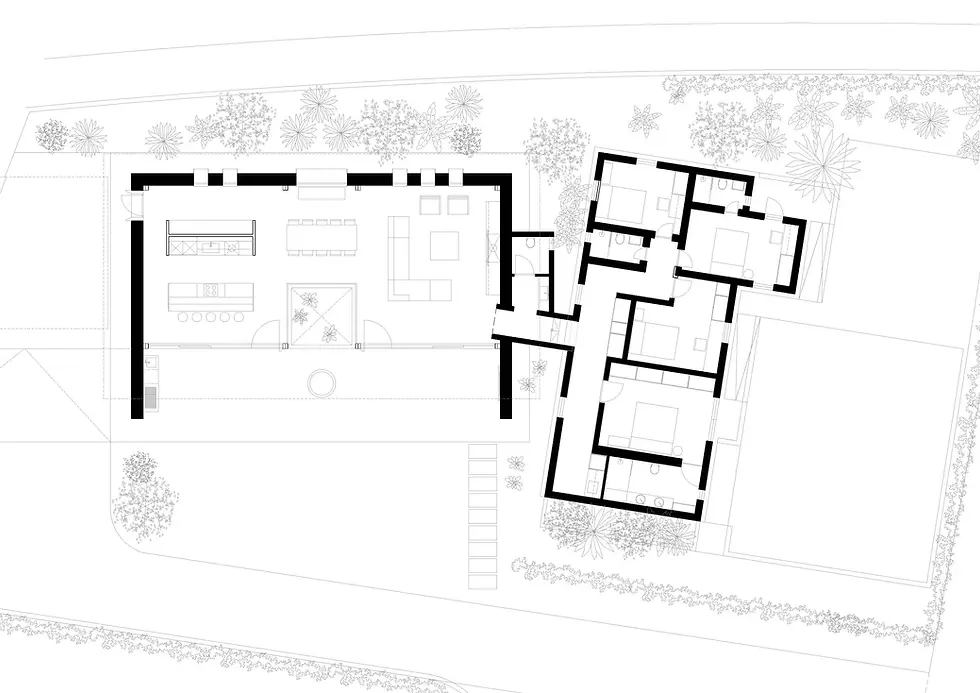
Taking into account the scale and geometric characteristics of the existing building, it was decided to redesign its internal layout. In this building, sleeping quarters and sanitary facilities will be placed, supporting the building program that arose from the family's needs. The inclusion of a primary longitudinal axis, starting vertically from the existing building, served as a communication bridge to the new construction, which will host the family’s living spaces. By accepting the geometric deviations and the differences in volumetric scale between the two structures, an attempt was made to coexist without being overly concerned about their absolute morphological connection.

The new construction is architecturally divided into four main sections: the kitchen, the dining area, the daily living room, and the atrium, which acts as a visual gesture of experiential quality. At the connection point of the two buildings, there is a sanitary area for visitors. The building is oriented southeast concerning the usage spaces, supporting bioclimatic approaches to solar gain and ventilation, thereby ensuring the thermal comfort of the occupants.
Similarly, the northwest openings/skylights facilitate thermal expulsion, activating the chimney effect and ensuring a comfortable and pleasant living environment.
The new building involves a lightweight metal structure with a mono-pitched roof made from prefabricated panels. Stone is applied in dry construction on the perimeter, exterior, and interior facades. Between the stone construction, thermal insulation is integrated into dry wall construction.
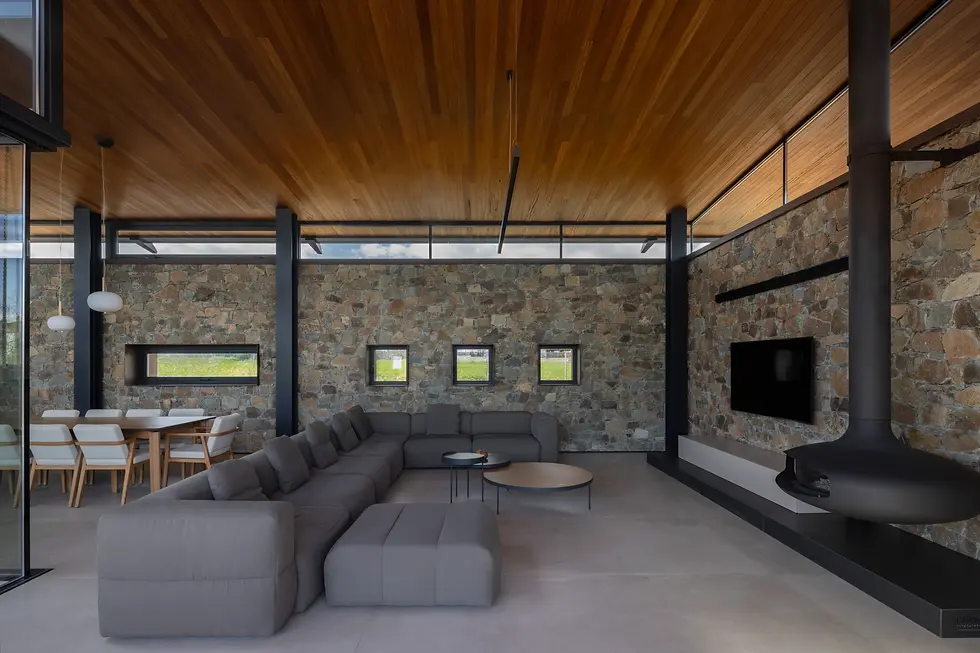


The interior ceiling is covered with solid iroko wood, which extends to the exterior projections of the roof. A special feature of the construction is the visible gutters which are part of the eastern and western part of the building.
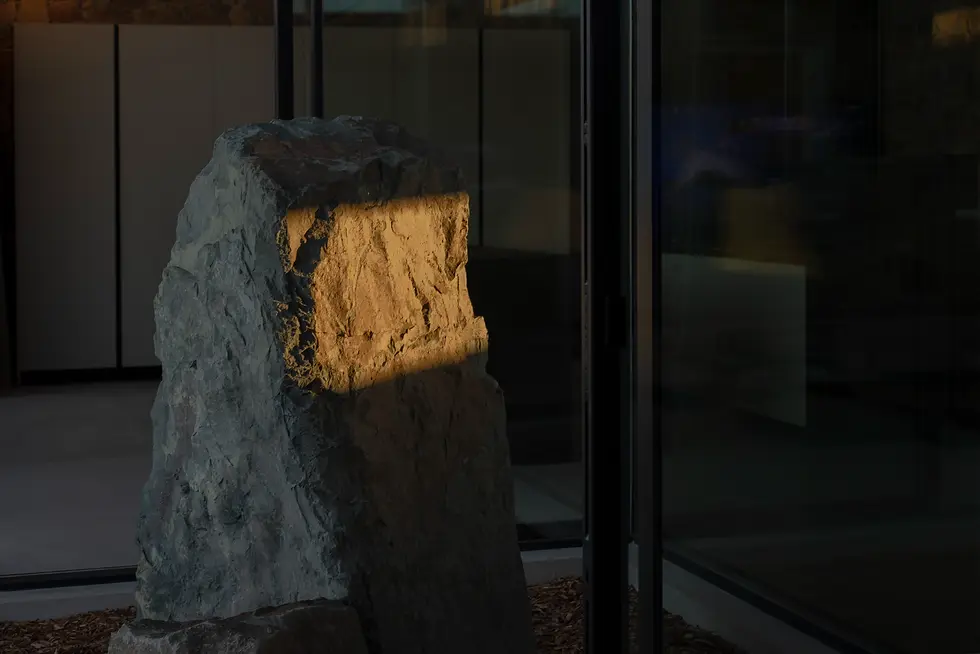


An essential component for integrating the buildings into the wider topography remains the natural element, which is expected to function as a second envelope in the near future, contributing to privacy and softening the overall built environment.
